Gerstein Lab Publications

Lab Software and Web Servers [tools]

Much of our work takes the form of freely available programs and/or web servers for analysis and visualization of biological data. Below is a partial listing of the many resources presented on this site, with links to the papers associated with them.

Please review the permissions statement before using any of these programs.

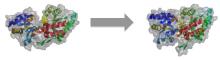
Morph Server The Morph Server generates a plausible pathway between two conformations of a protein or nucleic acid structure. A large number of statistics and several high-quality movies are output.
[ citation 1 | citation2 | related ]
ExpressYourself ExpressYourself is an interactive platform for background correction, normalization, scoring, and quality assessment of raw microarray data.
[ citation ]
SPINE SPINE is our laboratory-information management system (LIMS) for the NorthEast Structural Genomics Consortium. The online version is restricted to consortium users, but most of the code is freely available for download.
[ citation1 | citation2 ]
Pseudogenes Pseudogene.org is a collection of resources related to our efforts to survey eukaryotic genomes for pseudogene sequences, "pseudo-fold" usage, amino-acid composition, and single-nucleotide polymorphisms (SNPs) to help elucidate the relationships between pseudogene families across several organisms.
Tiling Tiling is under construction.
TopNet TopNet is an automated web tool designed to calculate topological parameters and compare different sub-networks for any given network.
Protein Geometry A number of programs for calculating properties of protein and nucleic acid structures have been collected into a single distribution. Included are a library of utility functions for dealing with structures, and a convenient interactive command-line interpreter. [ related papers ]
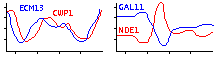
Local Clustering A new algorithm for local clustering of expression data to find timeshifted and/or inverted relationships is available as C source code. [ citation ]
Papers The publication listings on our site are automatically generated based on data from the NCBI and local annotations stored in XML format. The code which does this is freely available (some modification will be required for other sites).


An integrated system for studying residue coevolution in proteins.
KY Yip, P Patel, PM Kim, DM Engelman, D McDermott, M Gerstein (2008) Bioinformatics 24: 290-2.
Leveraging the structure of the Semantic Web to enhance information retrieval for proteomics.
A Smith, K Cheung, M Krauthammer, M Schultz, M Gerstein (2007) Bioinformatics 23: 3073-9.
PARE: a tool for comparing protein abundance and mRNA expression data.
EZ Yu, AE Burba, M Gerstein (2007) BMC Bioinformatics 8: 309.
Tilescope: online analysis pipeline for high-density tiling microarray data.
ZD Zhang, J Rozowsky, HY Lam, J Du, M Snyder, M Gerstein (2007) Genome Biol 8: R81.
Pseudogene.org: a comprehensive database and comparison platform for pseudogene annotation.
JE Karro, Y Yan, D Zheng, Z Zhang, N Carriero, P Cayting, P Harrrison, M Gerstein (2007) Nucleic Acids Res 35: D55-60.
ProCAT: a data analysis approach for protein microarrays.
X Zhu, M Gerstein, M Snyder (2006) Genome Biol 7: R110.
BoCaTFBS: a boosted cascade learner to refine the binding sites suggested by ChIP-chip experiments.
LY Wang, M Snyder, M Gerstein (2006) Genome Biol 7: R102.
Helix Interaction Tool (HIT): a web-based tool for analysis of helix-helix interactions in proteins.
AE Burba, U Lehnert, EZ Yu, M Gerstein (2006) Bioinformatics 22: 2735-8.
The tYNA platform for comparative interactomics: a web tool for managing, comparing and mining multiple networks.
KY Yip, H Yu, PM Kim, M Schultz, M Gerstein (2006) Bioinformatics 22: 2968-70.
PseudoPipe: an automated pseudogene identification pipeline.
Z Zhang, N Carriero, D Zheng, J Karro, PM Harrison, M Gerstein (2006) Bioinformatics 22: 1437-9.
PubNet: a flexible system for visualizing literature derived networks.
SM Douglas, GT Montelione, M Gerstein (2005) Genome Biol 6: R80.
YeastHub: a semantic web use case for integrating data in the life sciences domain.
KH Cheung, KY Yip, A Smith, R Deknikker, A Masiar, M Gerstein (2005) Bioinformatics 21 Suppl 1: i85-96.
TopNet: a tool for comparing biological sub-networks, correlating protein properties with topological statistics.
H Yu, X Zhu, D Greenbaum, J Karro, M Gerstein (2004) Nucleic Acids Res 32: 328-37.
ExpressYourself: A modular platform for processing and visualizing microarray data.
NM Luscombe, TE Royce, P Bertone, N Echols, CE Horak, JT Chang, M Snyder, M Gerstein (2003) Nucleic Acids Res 31: 3477-82.
SPINE 2: a system for collaborative structural proteomics within a federated database framework.
CS Goh, N Lan, N Echols, SM Douglas, D Milburn, P Bertone, R Xiao, LC Ma, D Zheng, Z Wunderlich, T Acton, GT Montelione, M Gerstein (2003) Nucleic Acids Res 31: 2833-8.
Beyond synexpression relationships: local clustering of time-shifted and inverted gene expression profiles identifies new, biologically relevant interactions.
J Qian, M Dolled-Filhart, J Lin, H Yu, M Gerstein (2001) J Mol Biol 314: 1053-66.
SPINE: an integrated tracking database and data mining approach for identifying feasible targets in high-throughput structural proteomics.
P Bertone, Y Kluger, N Lan, D Zheng, D Christendat, A Yee, AM Edwards, CH Arrowsmith, GT Montelione, M Gerstein (2001) Nucleic Acids Res 29: 2884-98.
The morph server: a standardized system for analyzing and visualizing macromolecular motions in a database framework.
WG Krebs, M Gerstein (2000) Nucleic Acids Res 28: 1665-75.

Return to front page